
Intestinal Parasite Control
Not all pet parasites are visible on their skin — some are more insidious, lurking inside their organs and causing internal harm. Learn more about how to keep your pets safe.
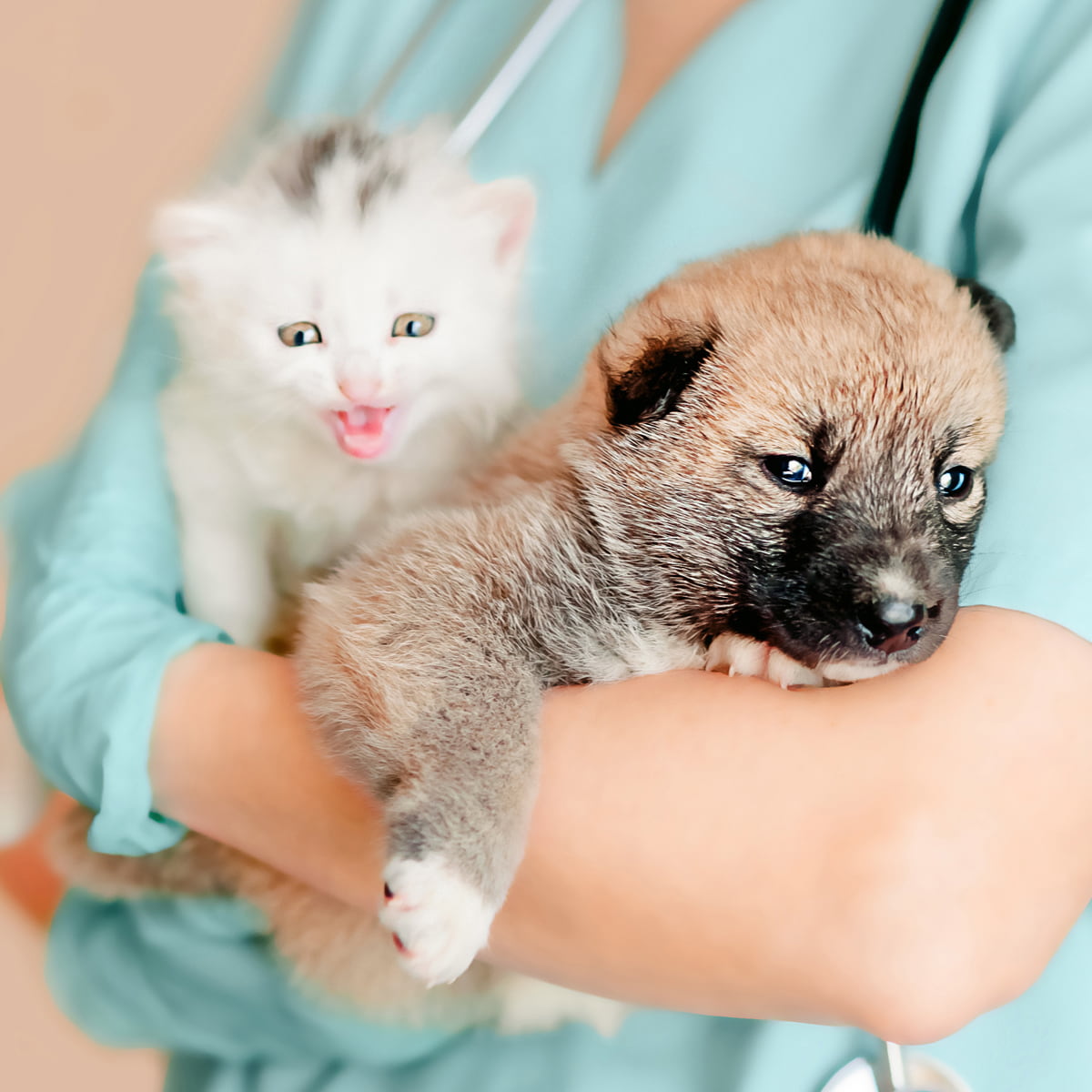
Preventing Intestinal Parasites in Pets
Intestinal parasites are very common in puppies, kittens, and adult cats and dogs. They can cause a variety of symptoms, including loose stools, bloody diarrhea, vomiting, dehydration, lack of appetite, weight loss, and lethargy. Intestinal parasites can be controlled with regular deworming.
Some parasites that infect dogs and cats can also infect & cause similar
clinical signs in humans.
Timberview Veterinary Hospital recommends cleaning litterboxes and removing feces from your property on a regular basis.
Roundworms
These parasites are among the most common intestinal parasites of dogs and cats. Your puppy can become infected from eating feces from an infected animal, eating rodents or birds, or suckling milk from the mother after birth. Roundworms inhabit the small intestine primarily and can cause any of the symptoms discussed above. These large worms may be seen in the feces or vomit. The eggs are very hardy in the soil and are extremely difficult to eliminate from your yard, garden, or sandbox.
Hookworms
Another frequently seen intestinal parasite, these organisms infect animals when they ingest the hookworm larvae, or the larvae can burrow through the skin (true for humans as well). Hookworms inhabit the small intestine primarily and can cause any of the symptoms discussed above. Hookworm larvae can last for months
in the environment.
Tapeworms
These parasites are segmented parasites that require a pet to ingest an infected flea or rodent in order to develop. Owners may notice small segments resembling dry rice or noodles on the fur around the rectum. When freshly passed in the feces, these segments may move or undulate as they attempt to migrate.
Coccidia
These single-celled organisms are transmitted much like other intestinal parasites — typically when an animal ingests feces from an infected pet. They can cause symptoms such as diarrhea, weight loss, decreased appetite, and lethargy. Rabbit droppings are also commonly contaminated with coccidia.
Giardia
This single-celled organism lives in water sources such as stagnant ponds or puddles, and pets become infected by drinking contaminated water. It can cause vomiting and chronic diarrhea, and humans are also susceptible to infection.
Whipworms
These parasites inhabit the large intestine. Again, animals become infected by eating microscopic eggs that are eliminated in the feces of an infected animal. They can cause severe bloody diarrhea, anemia, weight loss, and lethargy. Whipworm eggs can last for years in the environment and are almost impossible to eliminate from your yard once they are in the soil.